Article
Your children won't remember what you tell them about love. They'll learn what they watch.
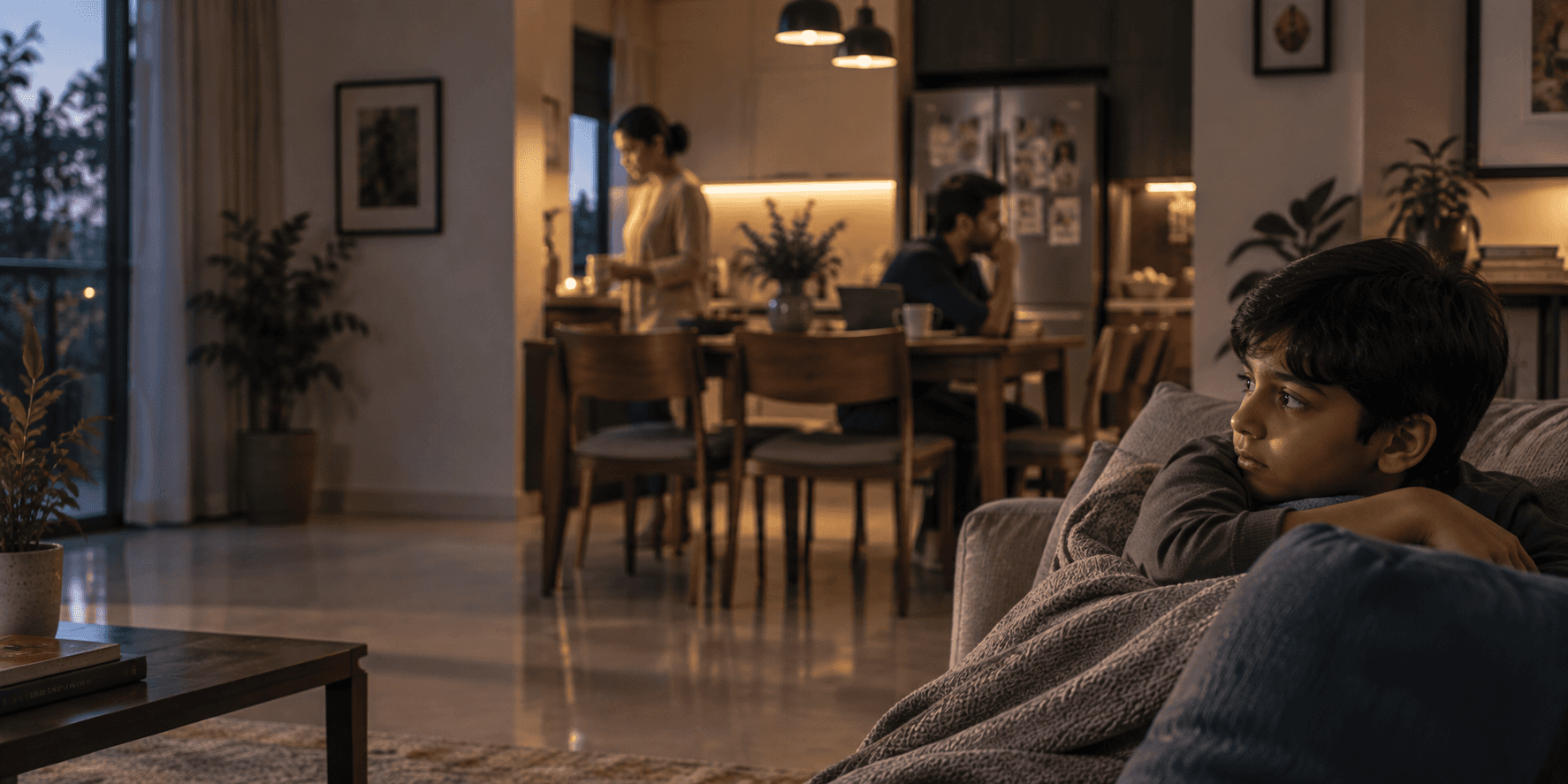
Children begin learning about love long before anyone explains it to them. They learn by watching how the adults around them handle conflict, closeness, tension and repair — and quietly absorb those patterns as their own emotional blueprint.
Date
Time
Event TYPE
Article
Murphy heard my voice calling from the other end of the house.
He had been sitting quietly in the shadows at the far end of the corridor, trying, it seemed, to make himself invisible.
It was where he often went when voices in the house grew louder or the air between us began to tighten.
Murphy has always been unusually sensitive to emotional weather.
He will come closer first — placing himself somewhere between the two people he loves, as though proximity alone might soften whatever is unfolding.
And when it doesn't, he retreats.
Not entirely.
Just far enough to feel removed from the tension, while remaining alert to every sound. Waiting for the atmosphere to change.

Just like children do.
They learn to sense the difference between footsteps. To hear the change in a voice before it rises. To know when it is safe to ask for what they need — and when it might be wiser to disappear for a while.
Long before they have language for tension, they have already learned to read the air.
Your children won't remember what you tell them about love.
They'll learn what they watch.
And perhaps, looking back, you'll recognise what you inherited from the home you grew up in.
The patterns that felt like personality.
The reactions that felt like logic.
The emotional weather you absorbed so completely you forgot it was ever weather at all.

Most of us are living out a love story that was written before we were old enough to choose it.
The question isn't whether something is being passed on.
It's what.
And whether you've looked at it.
⸻
That question became a book.

It's about what your relationship is teaching the people watching it most closely.
And what becomes possible when you examine that.